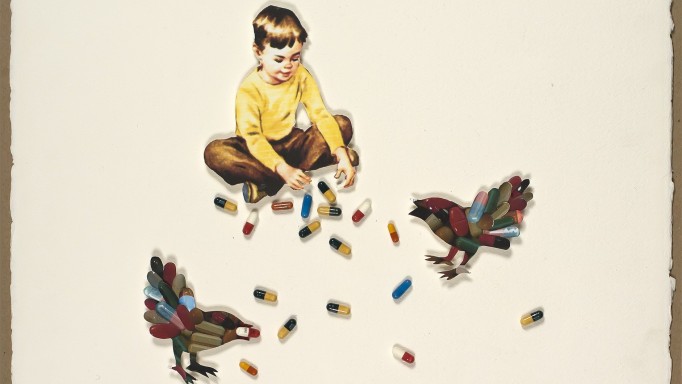
POZ October-November 2011

POZ October-November 2011
In every issue, you’ll find the hottest topics of interest to our readers along with cutting-edge health information.
Also Available On:
Features

R.I.P. HIV
Thirty years after people first started dying from a then-unknown virus, we face a thrilling tipping point in AIDS history.
From the Editor
Retiring the Ribbon
The end of AIDS. Doesn’t that have a wonderful ring to it?
Feedback
Letters- October/November 2011
I was so thrilled to see my friend Dottie Rains on the cover of POZ. I have known her for many years—what a wonderful person and role model.
The POZ Q+A
High-Impact Prevention
Kevin Fenton explains a new approach to prevent HIV in the communities most at risk.
What You Need to Know
Health Care Should Be a Human Right—for All
Two changes to health care (one actual and one proposed) could make it easier for Americans to access lifesaving tools when they’re needed.
Too Few Pharma Companies in the Patent Pool
Earlier this year, Gilead Sciences became the first manufacturer of HIV meds to join the Medicines Patent Pool Foundation.
Legislation Proposed to End Criminal HIV Laws
HIV-positive individuals are often presumed guilty and must prove themselves otherwise when it comes to laws that criminalize HIV, but that ma...
AIDS Is Not an “Automatic Death Sentence”
The law has finally started to catch up with the science—in Canada, at least.
Geckos Don’t Cure AIDS
Officials in the Philippines are fighting a growing trend of using geckos (small lizards) to treat AIDS.
We Hear You

The PrEP Debate
Pre-exposure prophylaxis, or PrEP, is the practice of people at risk for HIV taking daily doses of antiretroviral medication (ARVs) to...
What Matters to You
Getting HIV Care Without Getting Deported
Treatment options and help are available for people with HIV—and without immigration papers.
Treatment News
A Peek Into the Pipeline
A new entry inhibitor (EI) is in the works.
Savvy Survival Strategy
Researchers with the University of North Carolina at Chapel Hill have found that just being in an HIV clinical trial can enhance your health.&...
Going Norvir-Free?
To work most effectively, protease inhibitors (PIs) have long relied on a boost from Norvir (ritonavir).
Cure Watch
Recent advances in AIDS research have increased the hope of finding a functional, or therapeutic, cure for HIV.
Listen Up
Hearing loss in people with HIV results from age, race and other risk factors, not the virus.
Oh Baby!
At a U.N. summit this past June, the Elizabeth Glaser Pediatric AIDS Foundation announced its "Global Plan Towards the Elimination of New HIV...
Make Some Bones About It
A study by the Department of Veterans Affairs (VA) found that, while some HIV meds can play a role in the disproportionately high incidence of...
Comfort Zone
Waiting to Inhale
Every day, all day, in and out. It’s so natural, you do it in your sleep.
POZ Heroes
Defying Gravity
Orbit Clanton, co-founder of Perceptions for People with Disabilities, was diagnosed with GRID in 1982. (Watch video.)