


Deep in the heart of West Hollywood, Numbers is La La Land’s must-do dining experience for upscale male prostitutes and their admirers. The perimeter of the multilevel restaurant is lined with one-way floor-to-ceiling windows that permit patrons to discreetly cruise the action out on the Santa Monica Boulevard strip. Above, on the middle tier, are glass-topped tables for two, each “dramatically” lit with a single beam of light. The effect is to create the illusion of romantic intimacy while the constant distractions -- everyone is on stage -- actually make relaxed conversation as awkward as possible.
“I’m sorry,” he says, “but I’m not on the auction block anymore.” As the man slinks away, Lekakis takes a sip of coffee and another stab at answering the question I have put to him throughout our meal: How did he fall from his perch as international pop star with a top-10 single -- the 1987 dance hit “Boom Boom (Let’s Go Back to My Room)” -- to a drug-addicted hooker with AIDS? And how did the prettiest boy at the party then rise from those ashes?
Growing up in upstate New York, Lekakis wasn’t the star of Tarrytown’s boys’ choir and as one of five kids -- “As long as she wasn’t pulling us off each other, Mom was happy” -- he wasn’t a standout at home either. But at 15, Lekakis discovered both his sexuality and the power of his beauty. He says he never had a problem accepting that he was gay, but from the beginning, he found his leading-man looks to be the inevitable blessing and curse. On the one hand, they won him access to what he then saw as an intoxicating world of men, money and more. On the other hand, he quickly learned to keep his real self -- smart, ironic, direct -- under wraps. The brighter he played his visuals, and the quieter he kept his audio, the further he could climb the gay food chain.
At 16, Lekakis got a job waiting tables at Zippers, a gay watering hole in nearby New Rochelle, and soon dropped out of high school to devote his full time to training in the art of being fabulous. A year later, just after celebrating his 17th birthday getting trashed with the Zippers crowd, he moved to New York City and began studying to become a dancer. “I did some dance industrials,” he recalls, “and auditioned for music videos -- but I never got cast. I got the stuff that was like the model/fashion show/dance kinda thing.”
He also played overtime at such infamous nightspots as Alex’s and The Saint. “Being a clubkid in the ’80s was intense,” he says. “There was a pressure among all of us -- the scene was a career in itself.” Lekakis relied on an old formula for success: “winging it” and putting himself into situations where he would have no choice but to experience life.
Taking the ladder by storm, Lekakis says that he “jumped from relationship to relationship.” One bold-name paramour was a seven-figure fashion photographer who did test shots of Lekakis during their romance of convenience. The results clinched deals with the Click Agency in New York City, as well as one called Fashion in Milan, Italy. Riding high on the hype of a smooth-talking Fashion agent, Lekakis left the photographer for Milan. “I paid for my own ticket,” he says pointedly. “When I arrived, it was total culture shock. The agency was like boot camp for models -- there were hundreds of guys at each call. A couple of the bookers and photographers liked me, though. I lucked out.”
One appreciative lensman was Aldo Fali, who shot him for the first Emporio Armani ads. “The ad came out in 1986,” Lekakis recalls. “I thought, ’Wow, I came from the sticks and now my face is in Interview magazine.’” While his stints as a model were sporadic, Lekakis continued to perfect his skills as party boy extraordinaire. “I went out every night,” he says, “because there was really nothing else to do. All the models went to a club called Amnesty.” It was there that a dance-record producer who was a friend of a friend approached Lekakis and made an offer he couldn’t refuse. “He said he liked the way I moved and the energy that was coming from me,” Lekakis says.
“We did the demo in his basement,” he continues. “It was really just for fun. Then the president of the company in Italy heard it and wanted to pursue it. I signed a horrible contract.” No one was more surprised than Lekakis when “Boom Boom” had the world kicking up their Reeboks and soaking their Bennetons.
“It’s been described as a disco ditty, but it expressed the spirit of promiscuity of the time,” Lekakis tells me with an ironic laugh. Tame by today’s standards of boy bands and teen queens turning down the lights to rub you the right way, the “controversial” single sold more than six million copies worldwide. It went to No. 1 on the Billboard charts in Australia and Japan, top 10 in Italy and Canada. Domestically, the record was released on ZYX, a German dance label, and hit the top 40. But Lekakis says he never saw a penny in royalties. “I was young and stupid,” he says. “I, however, thought I was fabulous.”
And the fabulous encouraged the thought. In a blur of smiles and paparazzi flashes, Lekakis fell into the habit of never picking up a bill or balancing a checkbook. “I had all this fame but no money,” he says. “I was like, ”OK, I’d better ride this wave until it dies." Once back in Manhattan, Lekakis worked up a sweat trying to secure a U.S. recording contract. Most label execs rebuffed his calls because he did not write his own songs, but his luck changed when he met two music-biz legends -- no names, please -- impressed with Lekakis’ body of work. Within months, boytoy Lekakis landed a U.S. deal with Sire.
It was around this time, 1989, that Lekakis discovered that he had HIV. He was 24. “By the time I got my album deal, I knew I was positive,” he recalls. “I was really scared people would find out. Back then it was like a death sentence. Here I was being given the greatest opportunity of my life, but from these people who wanted to sleep with me,” Lekakis says, the faraway memory clouding his green-eyed gaze. “I was torn. If I didn’t have sex with them, I was fucked. And if I did, I thought I was going to kill them.”
Lekakis chose safe over sorry. To this day, he regrets the effect his decision likely had on his career. “I look back and think, ’Maybe if I had slept with this guy, things would have been different.’ He was a good friend ... ” He breaks off with a shrug. “I knew he liked me. Maybe I should have just sunk my teeth into it.”
In 1991, Lekakis’ eponymous debut album was released. His third single, “(Come on Over) To My House,” topped Billboard’s dance charts. “Warner Brothers [Sire’s parent company] wanted to market me as a teen idol,” he says, “but I was, you know, gay.”
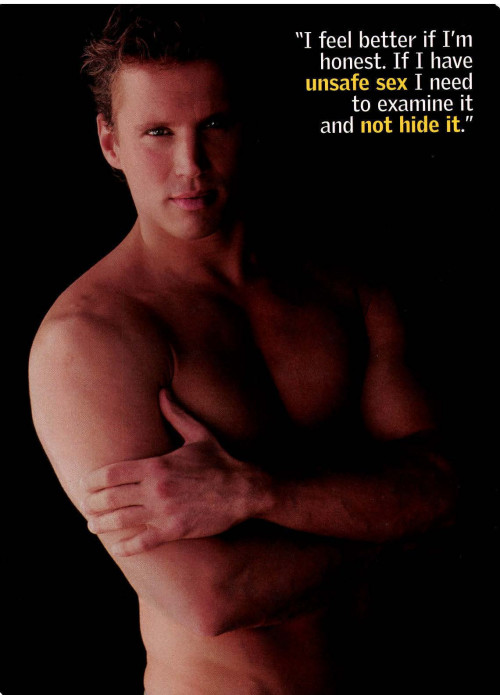
Paul “Boom Boom” LekakisGreg Gorman
Lekakis was dropped by Sire after just one album but continued to tour the gay club circuit on the strength of his “To My House” video. "A lot of the clubs I went to had featured strippers and female impersonators, but I was the first singer to ever perform there. Some club owner would put a board over the pool table, and that’s where I did my show.
“I got booked because I was gay and looked a certain way,” he continues. “There was a time when porn stars were my competition in nightclubs. So for a couple of years, I worked my hair and carried that look.” Once again, it came down to Lekakis selling his looks and over time, he says, the show became overtly erotic. “I started taking more and more clothes off,” he says. “I went from being a singer who strips a little bit to a stripper who sings.”
At 29, the one-hit wonder was yesterday’s news, and still petrified that his HIV secret would get out. Lekakis found that a steady diet of cocaine, ecstasy and booze could numb it all. In 1994, he decided to try his luck in Los Angeles. “One night, I was sitting in my apartment with a friend,” he recalls. “I was thinking, ’I’m positive, promiscuous and struggling, and I do not even have any furniture.’ I only saw one way out: I had heard about this place called Numbers and thought about turning tricks. That night, I decided to check it out.”
Lekakis’ introduction to the world’s oldest profession was harsh. “I met this wacko who got me into his car, and five minutes into the ride he started smoking crack. Here I was, this street-smart New Yorker, but I didn’t know how to pick a client. It was a disaster.” Lekakis rolls his eyes. “I had to wait to get paid -- a long, drawn-out ordeal. I learned from that one.”
Lekakis’ status as a gay icon was both an asset and a liability in his new career. “There were some who wanted to ’be with Paul Lekakis,’” he says. “Then there were guys who would suddenly recognize me and ask, ’What are you doing here?’ What did they think I was doing there? It bothered me, but that was because there was part of me that really didn’t belong there. But maybe every hooker feels that way.” Lekakis finishes his coffee and leans back, reflexively flexing. “Also, there was a side of me that felt I was helping people,” he says. “There are a lot of lonely people out there. Some are sexually dysfunctional and want to feel good.”
With a rueful pride, Lekakis says that he made enough money hooking to keep an apartment, make car payments, maintain two credit cards and live in the style to which he had once grown accustomed. But even as he struggled for stability, his abuse of drugs and alcohol skyrocketed.
At the bottom of his blue period, Lekakis confesses, he had unprotected sex with clients whom he did not inform of his HIV status. He also admits to lying to clients about his status and then having unprotected sex with them. “I feel remorse for lying,” he says. "I also accept the fact that I wasn’t strong enough to take responsibility at the time, and obviously neither was the other person.
“Today, I feel an HIV positive person should not have to carry the full responsibility in a sexual encounter -- it’s too much to bear,” Lekakis continues. “People know there is an epidemic going on in the world and they’ve got to protect themselves, period. I don’t know why I lied -- if it was fear, insecurity, alcohol or drugs. I wish I’d been stronger.”
In November 1997, feeling his health slipping away, Lekakis managed a major life change: He joined a 12-step group and quit drinking, doing drugs and turning tricks. Ironically, just 30 days sober, he was hit with his first HIV-related illness, PCP. “I went on general relief at first,” he says, “because I didn’t have the necessary paperwork to get disability. I had to wait on the welfare line, which was huge for me. I used to ask myself, ’Would I rather do this or hook?’ I always decided to wait.” He also got involved in an abusive relationship with another newly recovering addict. “I had just been diagnosed with AIDS and I thought it was my last chance at love,” he says. "I had resigned myself to the idea that, ’OK, this is the way it’s going to be. And that’s that.’
“Then I began to wake up,” he continues, still unsure what caused the tide to turn. “I realized there was something wrong with the relationship. When my ex-boyfriend went out and did drugs again, I packed my backpack and finally started living my life.”
For almost a year, until his disability kicked in, Lekakis slept on other people’s couches, did odd jobs and stayed true to his recovery process. Over time, a natural evolution in values and vision took place. How he felt began to take precedence over status, style and substances. Slowly, he started reconnecting with the boy he’d been repressing since he was 15.
Today, Lekakis lives simply in an open, airy West Hollywood apartment. My health is better than it’s been in years,“ he says. ”I didn’t do well on Crixivan the first year but it’s a trial-and-error thing. You learn how to work with the restrictions." In addition to his regimen, Lekakis takes care of himself through workouts, yoga, therapy and 12-step meetings.
He’s still singing, both on a new CD in the works and on a recent trip to Russia with the Gay Men’s Chorus of LA. Lekakis recalls, “A man came up and said in a heavy accent, ’Oh my God, you sang that song.’” Lekakis’ Russian routine is dead-on. “Then he started singing ’Boom, boom, boom.’ I thought, ’Well that pretty much covers the resumé.’”
But Lekakis says he has found his voice in acting. “I did my first play last summer, The Boys in the Band. I got the bug.” Lekakis says he likes it more than singing because “it’s more academic. I get to read and do homework.” This work ethic -- once channeled into the club scene -- now has Lekakis believing for the first time that he has more to offer than shaking his groove thing.
Since none of us is getting any younger, I ask if he has advice for anyone making the transformation from party boy to three-dimensional man. “Honesty,” he says. “A lot of us avoid looking at things. For me, I feel better if I’m honest. If I have unsafe sex, I need to examine it and not hide it. It’s hard, but if you leave it as a gray area you end up feeling like shit.”
When we leave Numbers, all eyes are on us. I had arranged for us to meet at his old haunt, despite his protests, because I thought it would help capture a made-to-order irony. But Lekakis’s story has proved bigger than these mirrored walls. Now, seeing this place through Lekakis’ eyes, I remember how much we all want to be singled out. When you’re 23, if someone does that for you and then changes his mind, you think the world is going to end. What happens when one is multiplied by the six million fans it takes to make a record number one? How many of us could resist waiting by the phone for the world to call?
Outside on the strip, I ask if he noticed the stares. “Sure,” Lekakis says. “I still enjoy being validated by that -- that doesn’t go away. I just don’t put as much weight on it.” He smiles. “Not much weight at all.”




2 Comments
2 Comments