

Last July, President Clinton’s Advisory Council on HIV/AIDS announced their “progress report” on the recommendations they have made over the past year. Many people were surprised when the President’s appointees to the council were themselves, in this report, critical of his administration’s efforts on AIDS.
Top-heavy with political appointees and campaign donors, few activists expected the council, chaired by Los Angeles physician and Clinton campaign fundraiser R. Scott Hitt, to be much more than apologists for the Clinton administration.
But with AIDS activists breathing down their necks, even the most blindly faithful Clinton supporters couldn’t ignore four years of White House inaction on several key AIDS issues -- particularly on what the council called “some of the more politically charged aspects of prevention and discrimination.” The report said federal prevention policy is “underdeveloped, lacks focus and is overly timid.” The final report noted that “when compared with what truly needs to be done, this administration’s efforts are still insufficient.”
The council’s report ended eloquently, noting that “the time for increased commitment, along with moral and political courage, is now.”
Here’s what I would like to say to the members of the council: You’ve made your recommendations. Most of the key ones have been ignored. What are you going to do about it?
How will you express your increased commitment? How will you express, personally, the “moral and political courage” you demand of the President?
It would take an increased commitment and moral and political courage for you to hold a press conference and blast the President’s continued refusal to lift the ban on federal funding of needle-exchange programs (which federal law authorizes him to do if the science supports it, which it does). Health and Human Services Secretary Donna Shalala has shamefully questioned the powerful and widely recognized evidence that this simple intervention can save thousands of lives.
It would take moral and political courage for the Clinton fundraisers on the AIDS council to announce that they will no longer raise funds for the Clinton re-election effort until he lifts the ban. It would take moral and political courage for you to resign -- before the election -- if Clinton didn’t implement that recommendation on an agreed-upon timetable.
You called for the President to find the moral and political courage to do what we all know needs to be done. I urge you to find that courage in yourselves and now do what you must to give your intelligent recommendations the force of real political power.
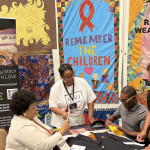
A great time to express that courage will be the weekend of October 11-13, when nearly a million people are expected in Washington, D.C. for the NAMES Project AIDS Memorial Quilt display.
This is a time of peak political leverage. Any action we can get will happen between now and November 5. Or it is likely not to happen at all.
I’m going to Washington that weekend and I urge you to go as well.
But when you see Clinton, Dole, Shalala and other politicians, bureaucrats and assorted beltway hangers-on hop on the AIDS memorial bandwagon, looking for our votes, listen carefully to the 40,000 Quilt panels. You won’t hear any applause coming from them.



Comments
Comments