


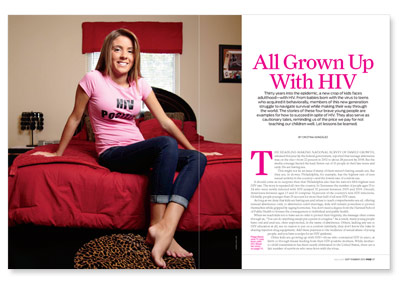
The headline-making National Survey of Family Growth, released this year by the federal government, reported that teenage abstinence was on the rise—from 22 percent in 2002 to about 28 percent by 2008. But the media coverage buried the lead: Seven out of 10 people in their late teens and early 20s are having sex.
This might not be an issue if many of them weren’t having unsafe sex. But they are, in droves. Philadelphia, for example, has the highest rate of teen sexual activity in the country—and the lowest rate of condom use.
It should come as no surprise then that Philadelphia also has the nation’s fifth highest teen HIV rate. The story is repeated all over the country. In Tennessee the number of people ages 15 to 24 who were newly infected with HIV jumped 32 percent between 2005 and 2009. Overall, Americans between ages 13 and 20 comprise 34 percent of the country’s new HIV infections. Globally, people younger than 25 account for more than half of all new HIV cases.
As long as we deny that kids are having sex and refuse to teach comprehensive sex ed, offering instead abstinence-only or abstinence-until-marriage, kids will remain powerless to protect themselves while gripped by raging hormones. You don’t need a degree from the Harvard School of Public Health to foresee the consequences to individual and public health.
When we teach kids not to have sex in order to protect their virginity, the message often comes through as, “You can do anything except put a penis in a vagina.” As a result, many young people have oral and anal sex, often unprotected, in the name of abstinence. Others, lacking any sex or HIV education at all, see no reason to put on a condom (similarly, they don’t know the risks in sharing injection drug equipment). Add these practices to the incidence of sexual abuse of young people, and you have a recipe for an HIV epidemic.
Other kids are growing up with HIV—those who contracted HIV in utero, at birth or through breast feeding from their HIV-positive mothers. While mother-to-child transmission has been nearly eliminated in the United States, there are a fair number of survivors who were born with the virus.
All these young people face similar challenges: learning to discuss and disclose HIV while developing social skills; dealing with HIV stigma while striving for self-esteem and self-empowerment; committing to the responsibility of daily treatment at a time of carefree youth; being accountable for their health and the health of others while they are still developing a sense of responsibility; and facing mortality at an age when feeling invincible is the norm. On top of this, they face the additional challenges of anyone living with HIV: handling the diagnosis of a serious and lifelong disease; finding, getting to, paying for and tolerating care and treatment; negotiating personal and family relationships in the face of HIV; dealing with mental health issues; and fighting stigma, discrimination and fear.
What is amazing is how well many young people deal with HIV. The first-person accounts of the strong, brave, smart “kids” on the next pages show that with the right attitude, the right support system and connection to care and treatment, growing up with HIV doesn’t have to rob kids—and society as a whole—of the glories of youth.
Lafayette Sanders, 24, West Philadelphia, Perinatally Infected
Having found power in disclosure and self-advocacy, musician Lafayette has found a new life. Now that he has broken down his own stereotypes about HIV, Lafayette is trying to help other people do the same.
I was in the doctor’s office. I was 13; it was a few months after my mother passed away. My grandmother took me for a checkup, and I was then told about me being HIV positive. My grandmother knew what I didn’t: My mom died of HIV, HIV that she passed along to me. They told me, and I took the meds but didn’t learn anything about HIV. At that age, I had no idea about the stigma or life spans. Having to take medications was like taking vitamins: You don’t know what it’s for, you just do it ’cause it’s good for you.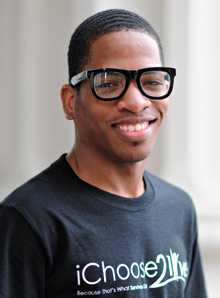 And then high school hit. I started to hang around kids my age, and everybody was talking about sex, and HIV came up in the picture. I wanted to tell them I was positive, but I didn’t know that much about it to tell and to be able to defend myself. I didn’t want to be looked at as different. So I didn’t disclose. There were so many feelings, and I was so angry for so long. It took me a long time to get over the anger at my mom—that she didn’t tell me herself, when we were so close and shared everything, and then to find out this big thing and to deal with it on my own. I was angry at her, God, myself, everybody. And then there was my grandmother. My grandmother was the primary guardian to my sister and me after my mother passed. My sister, who is not HIV positive, was too young to remember my mother’s death. My grandmother, who is a sweet and caring woman but also very traditional, put me in a box of fear. She made me believe that disclosing my status would change how people treated me, how they looked at me. It wasn’t true, to me—I knew someday people would understand and accept me for me.
When I was maybe 17 or 18, I woke up every day thinking about HIV and [I wanted to make it go away, to pretend it wasn’t there] so I stopped taking medication. I would hide it, pretend. I was young and irresponsible. And I was having sex.
The turning point came with my last two girlfriends. I disclosed to [the first one] right off the bat. Still we were reckless and irresponsible, and she got pregnant. She had a miscarriage, and to this day she’s negative. Second relationship, almost the same thing. She had an abortion. I was sitting in an abortion clinic, and I thought, “How the hell did I end up here? I’m reckless, and the people I’m with are reckless.” That was my wake-up call, the moment of “You have to get your shit together.”
I hooked up with iChoose2live [a youth organization designed to encourage self-esteem and awareness about HIV and other issues]. I thank God for everyone He has placed in and out of my life. He uses who He chooses when He chooses. If it weren’t for me meeting [hip-hop artist] Lee Mekhai at a show in Philly, I wouldn’t have found out about iChoose2live and the founder Shenille Melton. That opened a lot of doors for me as far as reaching the youth.
Since I had already taken a course for certification in HIV Peer Education through Philadelphia FIGHT’s program, Project TEACH, I thought about disclosing my status. For 10 years, my grandmother was the voice discouraging me from disclosing. I was secluded. She drilled into me that disclosing was not safe, that “the neighbors are gonna look at you this way, no one is gonna look at you the same way or accept you.” But as I began to educate myself about the virus, how it works and what it does, I began to lose the fear of disclosing. Then after I linked up with iChoose2live, I came out in a big way through interviews and the work [I did with that group].
My grandmother kicked me out when I told her I would be doing an open interview about me being positive with The Philadelphia Inquirer, which [was published] on September 13, 2010. [At that time,] I had no job, no money, I was struggling. But a lot of positive things came from my disclosure. People emailed me to thank me for being honest about my HIV status. I was intrigued and blessed that my story could help others. I started speaking to groups at the children’s hospital. Kids looked up to me.
I’ve learned that kids in public schools aren’t being taught what they really need to know. HIV is that disease that’s swept under the rug; no one talks about it. And youth are spreading [the virus] because they’re uneducated, misinformed and not being reached out to enough. I honestly think there should be mandatory classes in all middle schools through college for educating about HIV/AIDS [and other sexually transmitted infections].
Positive people my age need to be out there. You can’t have a 48-year-old man talking to kids about this. No one listens. You need someone like me, someone who is living with [HIV]—then it becomes more real. It’s a great feeling to be able to do that. And that’s just me! One person. Imagine if everyone was doing it, if everyone got together. We may not be able to stop this pandemic, but we can inform, educate and empower, and we can slow down the rates of HIV transmission.
I would like to write a book about my life living with HIV and just my life in general. I know my story and experiences within these past 24 years can help educate, empower and change other people’s lives—people of all ages. My story will heal lives all over and most importantly let everyone know the power of God. He’s the only reason why I’m still alive and healthy.
I’m looking forward to the future, staying healthy and changing people’s lives.
Angelikah Demonikah, 27, Minneapolis, Behaviorally Infected
Open and direct about her diagnosis, Angelikah is moving forward. While pursuing her college degree and navigating social and romantic relationships, Angelikah is resolute about how she will live her life.
I found out I was positive July 29, 2008. When I contracted HIV, I was drinking and using drugs. I made a stupid mistake with someone I didn’t really know, and it came back to bite me. I tested for HIV when I was in [therapy and drug] treatment a few months later. Seven days after I got out of treatment the health department came to my door and told me I was positive. Two years later I found out that the person I contracted it from knew he had it and didn’t bother telling me or using a condom. Though I am angry about this, I accept personal responsibility. You never know what someone has, and it is up to you to protect yourself and make smart decisions.
After I found out, I relapsed and spent the next year getting high to avoid dealing with it. Then one day I realized that being HIV positive was a reason to take care of myself, not to self-destruct, so I sobered up. Since then, I have been doing better than ever.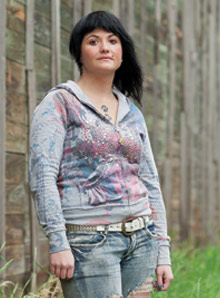 Ever since the day I found out, I have been completely open with everyone—friends and family. The day I told my dad, that was the hardest. I just didn’t want him to worry about me. But he took it as well as he could, and everyone has been incredibly supportive.
I did have access to therapy—I’ve been diagnosed bipolar for about 13 years so I stay in therapy and take mood stabilizers to keep the symptoms in check. It helped me become active, prompting me to speak out online and on TV. So basically I’ve been not just open but public.
The biggest obstacle of living with HIV, so far, has actually been dating. Though I haven’t really had anyone reject me based on my status, there are extra complications. I am a lot more selective about who I date, for example. I have to feel I can trust someone to understand, so in a sense it weeds out the people who aren’t worthwhile. And while some people accept it and are OK with my status, I know—because I am so public—that anyone dating me has to really consider whether they are comfortable with their family and friends criticizing them for dating someone who is positive. Finally, there is a lot more conversation around sex, which is probably a good thing.
I do feel stigmatized, singled out. I believe anyone who is openly positive will be, but the more of us who are out there speaking out the less this will happen. I can honestly say, though, that while I can count my bad experiences on one hand, there is no way I could ever tally up how much love, support and understanding I have received. And ultimately, people have surprised me. I find that people are a lot more open-minded than I originally anticipated.
I feel it is important for people, especially young women and heterosexuals, to start talking about HIV. There is still too much misconception about it being a gay disease or something that only happens in Africa. People need to know HIV does not discriminate. All it takes is one decision. I know that.
David Goode, 24, Brooklyn, Behaviorally Infected
On his own since the age of 13 and still trying to make sense of his diagnosis and when and how to seek treatment, David is slowly carving out his life. While working part-time jobs and making ends meet with the help of government housing programs, he is taking it one day at a time.
I got HIV when I was 19 through unprotected sex with someone I met on the A train. Crazy, right? I was single and having fun and struck up a conversation. It happens. Except this time, for me, it was different.
Fast forward a few months later. I’m sick, I’ve lost 40 pounds, I’m hospitalized. The doctor took one look at me and tested me. I got a call from the doctor while I was at work. I was positive. 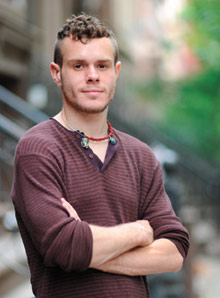 In that moment, that second, I became the hateful stereotype my family always believed. When I had run away [six years earlier] I thought I was going to prove my family wrong, show them my life was going to be OK. And now…I’ve let myself down. I’m ashamed and guilty.
I came out when I was 13. Thirteen. My first time had been at the age of 11, with a classmate. A boy. Two years later, after I came out, my Christian family excommunicated me. I’ve been on my own ever since.
Until I was 17, sex was the way to survive. I jumped around from friends to friends eventually attaching myself to a man 10 years older than me. I hung out with heroin addicts, I had unprotected sex, I engaged in prostitution.
During that time, I had no support to keep me safe—except the LGBT Center. I started volunteering and getting tested every six months. [But I was still having sex,] and the sex wasn’t always so safe. I just depended on someone else to have a condom. And they usually didn’t.
I’m not on treatment, and I haven’t seen a doctor. To think I have full access to treatment, a single gay male, and other people can’t. A mother with children in Zimbabwe can’t. I feel guilty.
Some days I feel like a leper, an untouchable. I feel different. People are out of touch with people who have HIV because positive people don’t stand up, they have no voice. And the government and prevention programs, they instill fear instead of spreading awareness.
If I had met someone my age who was also positive, it might have changed things a little bit. I might have played it safe, protected myself. It would have been more real to me. Now I know, this is real. We’re getting it, it’s still around. So we have to protect ourselves and others. Respect yourself and others. Don’t be that person who gave it to you.
Everyone probably knows someone who is HIV positive, and it would help us if [positive people were more open about their status]. That way when senators or someone had to decide on cutting back on funding, they would know someone it would hurt. [If more people were open about their status,] it would help with the stigma—it wouldn’t be someone dirty from the street they don’t know; it would be their brother or sister or neighbor.
We can end stigma, and we can end AIDS. We have to stand up at once.
Paige Rawl, 17, Indianapolis, Perinatally Infected
She is a high school student, an athlete, a teen. Having encountered and overcome enormous stigma, Paige has flourished—making a place for herself in a world that hasn’t figured out how to make a place for youth living life with HIV.
My name is Paige, and I’ve been positive for 17 years. My mom unknowingly passed it on to me, and she found out her status right before I turned 3. She contracted the disease from my father—we’re not sure how or when he contracted HIV. That’s just the way it goes.
My mom told me I was positive when I was in fifth grade. But I didn’t get it. I took the pills because that’s what you do when you’re young and your mom gives you pills. And then middle school happened.  In sixth grade I confided in my best friend; I told her I’d been HIV positive since birth. Within two weeks, she had told her sister and other people, and they told others, and eventually the whole school knew. Everyone. People threatened to beat me up; they left a note on my locker saying “No AIDS at [school name].” They gave me a nickname: “PAIDS.” They told each other not to drink after me, as if HIV was contagious [that way]. I went from [being] popular to having no friends.
In eighth grade, I made the soccer team. I was going to be part of a team. Then someone told my coach I had AIDS. At our first away game, my coach approached me on the bench, in front of other players, and asked, “By the way, I heard that you have AIDS. Is that true?” I said no, because I don’t have AIDS, I am HIV positive and there is a difference.
I was so upset. This was a coach. Someone who should know. I told mom, who confronted my coach at school. She admitted to asking me and went on to say, “The soccer team could use my HIV status to an advantage, and the other team will be afraid, and I can score goals.” I withdrew from the school and finished out my year with homeschooling.
My mother has been so supportive. And my family. I didn’t have to disclose to them; my mom told them before she even told me. But you need support of different kinds. Since the bullying, the coach, the discrimination, I’ve started seeing a counselor and started taking an antidepressant. It’s OK to look for help, and it’s OK to get help.
I realized that I can help other people too. I wanted to take a bad situation and turn it into something good by helping others know about HIV and the precautions they should take. So I became a peer sex educator and a certified HIV/AIDS educator through the American Red Cross.
I also started looking for support groups and even tried to start one. I searched the Internet, I asked questions, and I was referred to Camp Kindle [a free summer camp for kids living with or affected by the virus]. Meeting other kids [like me] has given me people to talk to, people who can relate to what I’m going through.
These days, I am open about my status to everyone. I take the time to speak to my peers, raise awareness and share my story. Funny, after disclosing to my former best friend in sixth grade and it spreading through the school, it just became easier to tell people who didn’t already know. For the most part, there’s a positive response. The fear that I should not have disclosed my status so soon just doesn’t exist anymore.
I know firsthand that there are still big misconceptions out there about how you can and cannot contract HIV. [We need] more education among youth in the U.S., and there should be more support groups. Youth need to see themselves reflected in what’s taught, in the information they are given.
The hardest part about living with HIV is the stigma that goes along with it. But I have hope. Two years ago, I was the freshman class president, on the JV cheerleading squad and on the soccer team. Last year, I was part of the student government and on the varsity squad. I volunteer, I share my story, I travel. I have hope.


11 Comments
11 Comments