

Five years ago, after years of labored breathing, wheezing and coughing (with mucous), Mark Lewis learned that he had chronic obstructive pulmonary disease (COPD), which blocks the flow of air in the lungs. Forty-eight at the time, Lewis had been smoking for 34 years. Lewis, who lives in New Mexico, says, “[When I got the diagnosis] I wanted to kick myself in the pants. I thought, ‘This wouldn’t have happened if I hadn’t smoked.’ But it wasn’t as bad as when I was diagnosed with HIV [in 1985].”
COPD, an umbrella term, can include emphysema or chronic bronchitis, and Lewis’s symptoms were typical early signs. Over time, COPD may increase the risk of recurrent lung infections and can cause appetite and weight loss, muscle wasting, cardiovascular disease or low oxygen levels (possibly leading to pulmonary hypertension).
Long-term smoking—about 20 pack-years (a pack a day for two decades)—poses by far the greatest risk for COPD, and quitting can slow COPD progression. Lewis, who tried to quit many times before his COPD diagnosis, has now kicked the habit.
But even nonsmokers with HIV—those with no other known risk factors such as occupational exposure to inhaled toxins or smoked or injected drugs—get COPD more often than negative people. That’s what Katrina Crothers, MD, a researcher and pulmonologist at Yale School of Medicine, concluded from her recent study of 1,014 HIV-positive and 713 negative male military veterans. And unlike negative people, who generally develop COPD in their 50s or 60s, positive people are getting COPD at younger ages.
The study doesn’t show that HIV causes COPD, Crothers points out, nor does it explain the link between HIV and COPD. Lung tissue inflammation created by HIV may be one culprit. Another, she says, could be that HIV contributes to an accelerated aging of the lungs. (A recent Johns Hopkins School of Public Health study showed a similar but weaker correlation between lung cancer and HIV.)
Even a high CD4 count and undetectable viral load that can protect against some lung infections may not defend against HIV-related COPD. Lewis, for example, had an undetectable viral load and about 1,100 CD4s when his COPD was diagnosed.
While it’s not known whether HIV-positive women are similarly at higher risk for COPD, studies have shown women in general to be more susceptible. Because women’s lungs are often smaller than men’s, the same amount of exposure to cigarette smoke or other inhaled toxins may cause more damage in women. There are several COPD studies underway that include HIV-positive women, so this question may soon be answered.
Until we have more clarity, Crothers urges health care providers to view all people with HIV as a COPD high-risk group who could benefit from regular tests monitoring lung function.
Diagnosis—And Beyond
You can’t diagnose COPD yourself—you need to see your primary care physician, who may consult with a pulmonologist. Along with examining your risk factors (including cigarette history), the doctor may order a chest X-ray, CT scan and pulmonary function test (PFT, which Crothers describes as “the gold standard” of COPD diagnosis). Combined, these tests detect any lung obstruction and measure lung function. COPD’s early signs can be similar to those of pneumonia or asthma, so if you have trouble breathing, check with your doctor to determine the cause.
If you have COPD, the primary goal of treatment will be to relieve symptoms. Short- and long-acting bronchodilators (Atrovent, Combivent, Foradil, Serevent and Spiriva) or steroid inhalers such as Advair might help. (Two warnings: Advair contains fluticasone, which interacts with Norvir/ritonavir-containing antiretroviral regimens such as Kaletra, possibly causing severe side effects. Using a steroid inhaler can also put you at risk for bacterial pneumonia.) Your doctor may also prescribe antibiotics to treat common pulmonary bacterial infections.
“More severely impaired patients,” Crothers says, “may benefit from pulmonary rehabilitation programs that include exercise and breathing techniques.” Advanced COPD may require oxygen therapy or lung surgery (even transplants). Early detection can help render these radical treatments less necessary.
Asked for tips on managing COPD, Crothers emphasizes kicking cigarettes. Even though COPD isn’t completely reversible, she says, “There may be some improvement if people stop smoking—important at any stage of COPD.” Stopping any street-drug use may help as well, she says, because “smoked or injected drugs like cocaine, heroin and methamphetamines can also damage the lungs.” (California recently added marijuana smoke to its list of cancer risks.) And since some occupational or environmental exposures may raise the risk of COPD, Crothers recommends using appropriate respiratory protection at all times.
Two years ago, with determination and the stop-smoking drug Chantix, Lewis finally quit. He regularly discusses lung disease with his doctor and reads about it online, and he has made changes to improve his overall health. “I do cardiovascular exercise at least three times a week,” he says. “I reduced my drinking and modified my nutrition, partly to help lower my cholesterol. As you get older, you can’t just treat HIV. You have to watch other conditions too.”
TIPS FOR LUNG HEALTH
• Butt out
Yes, we’ve made this point countless times: Stop smoking. Help is available, and seeking it out could be the best health investment you ever make.
• Sweat
Aerobic exercise, also called cardiovascular exercise, improves your body’s oxygen consumption and helps your lungs. Pick an activity you enjoy so you’ll stick with it.
• Eat well
Good nutrition (including lots of fresh fruits and veggies high in antioxidants) may improve lung function.
• Get shot
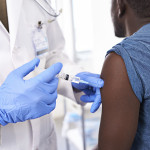
Talk with your doctor about getting regular immunizations, particularly the pneumococcal and influenza vaccines. Common seasonal flu stresses your lungs.
• Plan ahead
If you are at risk for any of the infections that take advantage of damaged immune function (especially for those with low CD4 counts), ask your doctor about preventive treatments.
Advertisement
Breathe Easy
Clear the air and learn to cope with lung disease (a common companion of HIV).
Advertisement
Advertisement



Comments
Comments