
The Documentary bookstore features nonfiction films about HIV and AIDS. Films are listed in alphabetical order by title. Click the title to read more about each film. Missing your favorite film? Click here to send us your recommendations.
- 1985
- 5B
- 60 Minutes - Fighting AIDS
- Absolutely Positive
- Author: the JT Leroy Story
- Bully. Coward. Victim. The Story of Roy Cohn
- Chemsex
- Common Threads - Stories from the Quilt
- Don Quixote in Newark
- Ending HIV in America
- Frontline: The Age of AIDS
- How to Survive a Plague
- I Am Because We Are
- Investigative Reports: AIDS In America: The Crisis Continues
- Kiki
- My Friend, The Mayor: Small Town Politics in the Age of Trump
- Jam
- Memories of a Penitent Heart
- Pandemic - Facing AIDS
- Sex Positive
- Silverlake Life: The View from Here
- Strike A Pose
- We Were Here

The year 1985 will tell any long-term survivor everything he or she needs to know about the human drama percolating beneath the quiet surface of this affecting film. Yen Tan’s simple black-and-white film draws a portrait of a gay man living with HIV coming home to see his family—and quietly unearths their conflicts and secrets.
Available to stream on Amazon.

5B is the inspirational story of everyday heroes, nurses and caregivers who took extraordinary action to comfort, protect and care for the patients of the first AIDS ward unit in the United States. 5B is stirringly told through first-person testimony of these nurses and caregivers who built Ward 5B in 1983 at San Francisco General Hospital, their patients, loved ones, and staff who volunteered to create care practices based in humanity and holistic well-being during a time of great uncertainty. The result is an uplifting yet candid and bittersweet monument to a pivotal moment in American history and a celebration of quiet heroes, nurses and caregivers worthy of renewed recognition.
Available to stream or on DVD on Amazon.

Since leaving office and re-structuring his life, Bill Clinton has taken up what some would consider even bigger causes, like eradicating AIDS.
Available on DVD on Amazon.

This upbeat documentary is an exploration of how those living with an HIV-positive diagnosis manage in the face of what is widely considered to be a death sentence. The stories of these twelve diverse individuals, who range from gay men to blood-transfusion recipients and heterosexual couples, are told in a direct fashion largely through interviews. The interviews are occasionally amplified with narration provided by the director, himself living with being diagnosed HIV-positive.
Available on DVD on Amazon.

A look inside the mysterious case of 16-year-old literary sensation JT LeRoy—a creature so perfect for his time that if he didn’t exist, someone would have had to invent him. The strangest story about story ever told.
Available to stream or on DVD on Amazon.

Bully. Coward. Victim. The Story of Roy Cohn
This film explores infamous attorney Roy Cohn’s rise to power and how his influence continues to rule today.
Available to stream on Amazon.

Traversing an underworld of intravenous drug use and weekend-long sex parties, “Chemsex” tells the story of several gay men struggling to make it out of ’the scene’ alive—and one health worker who has made it his mission to save them.
Available to stream or on DVD on Amazon.
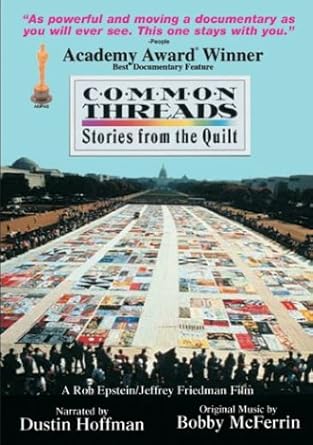
Common Threads - Stories from the Quilt
As of 2004, a variety of drugs have been developed to resist, if not cure, AIDS—yet Common Threads: Stories from the Quilt remains as emotionally powerful as it was during the height of the crisis, when people were dying by the thousands every year. With a combination of photo-montages, interviews with friends and family members, home movies, and news footage, this 1989 documentary captures the grief of those who have survived victims of AIDS. It’s wrenching to hear the mother of a hemophiliac boy describing giving him blood transfusions in the middle of the night, or seeing pictures of a former Olympic athlete with the daughter he fathered with a lesbian mother, or hearing a Naval officer describe his relief when he learned that he, like his dead lover, had the virus--that the stress of waiting was over. A moving combination of art and politics.
Available to stream on Amazon.

When Dr. James Oleske insisted babies in Newark were getting the new and unknown disease then appearing in gay men and drug users in the ‘80s, every established authority told him that he was crazy. Forming a powerful alliance with the poor mothers and grandmothers of Newark, Oleske never stopped fighting. His brilliant work ultimately ended the pediatric AIDS epidemic in America.
Available to stream on Amazon.

Almost 40 years after the discovery of HIV, could we be on the verge of ending the AIDS epidemic in America? How did scientists and the public health community tackle one of the most elusive deadly viruses to ever infect humans? Can innovative drugs bring new infections to zero? This is the story of scientific achievement and public health work that still needs to be done to end HIV in America.
Available to stream on Amazon.

On the 25th anniversary of the first diagnosed cases of AIDS, FRONTLINE examines one of the worst pandemics the world has ever known in The Age of AIDS.
Available on DVD on Amazon.
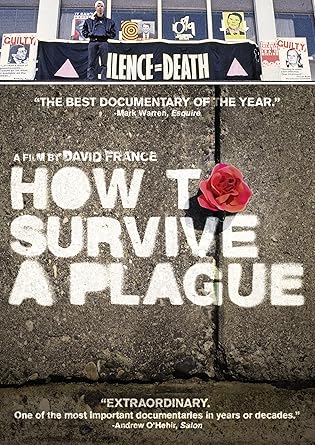
The story of two coalitions—ACT UP and TAG (Treatment Action Group)—whose activism and innovation turned AIDS from a death sentence into a manageable condition. Despite having no scientific training, these self-made activists infiltrated the pharmaceutical industry and helped identify promising new drugs, moving them from experimental trials to patients in record time. With unfettered access to a treasure trove of never-before-seen archival footage from the 1980s and ’90s, filmmaker David France puts the viewer smack in the middle of the controversial actions, the heated meetings, the heartbreaking failures, and the exultant breakthroughs of heroes in the making.
Available to stream or on DVD on Amazon.
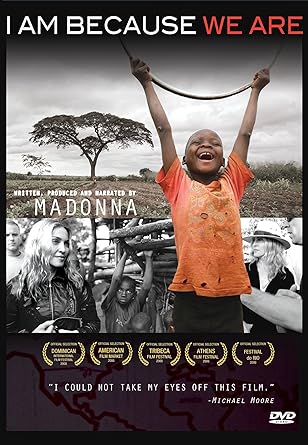
In the African nation of Malawi, disease, poverty and famine have taken a horrible toll, especially on young people—in a country of twelve million people, one million are orphaned children. In 2006, pop singer Madonna began studying the crisis in Malawi, and decided to use her wealth and celebrity to help; she helped finance the construction of a home for orphans, founded a relief organization called the Raising Malawi Orphan Care Initiative, and as a personal example she and her husband adopted a boy from Malawi, David Banda Mwale, whose mother had died. Now, Madonna has written and produced I Am Because We Are, a documentary about Malawi that attempts to demonstrate at the need for action by profiling eight children growing up without parents; these youngsters long for a better life and strive to remain optimistic about the future despite the long odds fate has set against them. I Am Because We Are also features interviews with a number of people working to alleviate the ongoing tragedy in Malawi, including Bill Clinton, Bishop Desmond Tutu, Prof. Jeffrey D. Sachs, and leaders of a number of leading relief and charitable organizations. I Am Because We Are received its North American premiere at the 2008 Tribeca Film Festival.
Available on DVD on Amazon.
Investigative Reports: AIDS In America: The Crisis Continues
Many Americans hold the misguided idea that the AIDS crisis has largely passed, that the disease is now manageable and a cure is coming. Unfortunately, it is just this belief that is fueling a new wave of cases as the epidemic spreads. Investigative Reports interviews doctors, social workers and AIDS patients from every demographic to show the real face of the disease today. With a million Americans currently HIV Positive, and a growing number of them not responding to the latest drug therapies, the medical situation stands in stark contrast to the complacency documented in communities across the nation. By tracing the path of one medication—Calanolide A—AIDS In America shows the hope and disappointment that accompanies every possible breakthrough. And by talking to those at the front line of the ongoing fight, a disturbing picture of a disease and people’s views of it emerges. Now, more than ever, AIDS is not a “gay,” “junky,” or “minority” disease; it is a threat to everyone who is sexually active.
Available on DVD on Amazon.

A captivating look into the daily lives of a group of LGBTQ youth who comprise the “Kiki” scene as they prepare for and perform at fierce and exuberant ballroom competitions in New York City.
Available to stream on Amazon.

“Larry Kramer: In Love & Anger”
Author, playwright and AIDS activist Larry Kramer is the focus of this portrait of one of the most important figures in gay America.
Available to stream on Amazon.
United in Anger: A History of ACT UP
United in Anger: A History of ACT UP is a unique feature-length documentary that combines startling archival footage that puts the audience on the ground with the activists and the remarkably insightful interviews from the ACT UP Oral History Project to explore ACT UP (the AIDS Coalition to Unleash Power) from a grassroots perspective.
Available to stream or on DVD on Amazon.
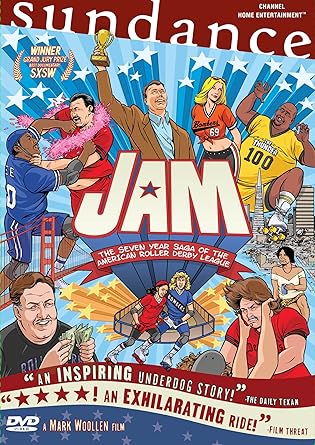
The title of Mark Woollen’s documentary Jam is slang for a roller derby match, and though many mistakenly believe that this craze died a rapid death after the late ’70s, Woollen and company use screen time to demonstrate otherwise. The film explores the half-decade-long effort of the Frisco-based American Roller Derby Association to keep itself afloat, via the concerted and diligent efforts of its members. Woollen profiles several of these individuals, most of whom are middle-aged, eccentric, colorful and flamboyantly gay; subjects include: Streisand-digging member Dan Ferrari, who claims that he would place a roller derby match before a luxury cruise; Alfonso Reyes, a player with 32 years of experience behind him who once turned tricks for $100 per on the streets of San Francisco, then moved in with the same partner for nearly two decades; and ARDA president Tim Patten, afflicted with HIV for nearly 25 years but insistent on pouring all of his personal money into the organization. The main gestalt of the narrative involves Patten’s recruitment and assembly of a seasoned team of players, and his decision to promote the team’s doings on the internet—amid a rapidly deescalating number of fans.
Available on DVD on Amazon.

Twenty-five years after Miguel died of AIDS, his niece tracks down his estranged lover and cracks open a Pandora’s box of unresolved family drama.
Available to stream on Amazon.
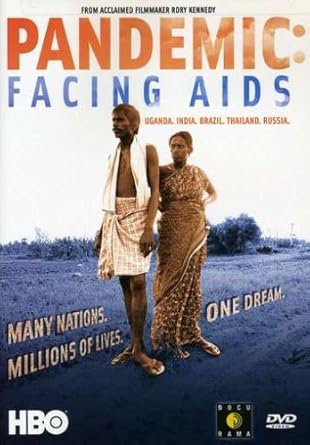
Directed by Rory Kennedy, this film covers the key aspects of the world AIDS epidemic through powerful documentary stories about five victims and their communities, on five continents.
Available on DVD on Amazon.
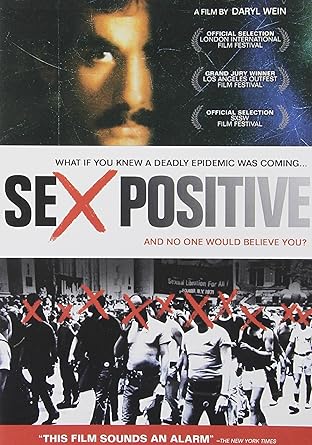
Explores the life of Richard Berkowitz, a revolutionary gay S&M sex worker turned AIDS activist in the 1980s, whose incomparable contribution to the invention of safe sex has has never been aptly credited.
Available to stream or on DVD on Amazon.
Silverlake Life: The View from Here

UCLA film teacher Tom Joslin and his partner, Mark Massi, both living with AIDS, documented the most intimate details of their daily lives in this documentary. The film has the production values of a home movie, which is what it ultimately is, and the two men are charming and in love—until AIDS takes its ultimate toll in harrowing footage of their final moments together. An important film but not for the faint of heart.
Available on DVD on Amazon.

In 1990, seven young male dancers—6 gay, 1 straight—joined Madonna on her most controversial tour, Blond Ambition. Wile, talented and barely twenty, the dancers set out on the trip of a lifetime. On stage and in the iconic film Truth or Dare they showed the world how to express yourself. Now, 25 years later, they reveal the truth about life during and after the tour. Strike a Pose is a dramatic tale about overcoming shame and finding the courage to be who you are.
Available to stream or on DVD on Amazon.
My Friend, The Mayor: Small Town Politics in the Age of Trump

United in Anger: A History of ACT UP is a unique feature-length documentary that combines startling archival footage that puts the audience on the ground with the activists and the remarkably insightful interviews from the ACT UP Oral History Project to explore ACT UP (the AIDS Coalition to Unleash Power) from a grassroots perspective.
Available to stream or on DVD on Amazon.
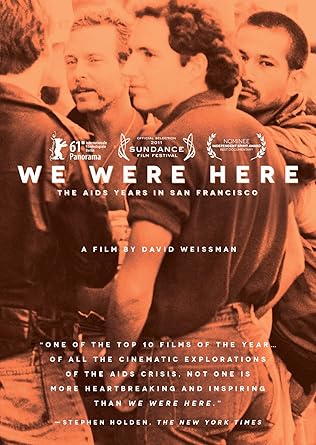
The first documentary to take a deep and reflective look back at the arrival and impact of AIDS in San Francisco. It explores how the city’s inhabitants were affected by, and how they responded to, that calamitous epidemic.
Available to stream or on DVD on Amazon.