
The General bookstore feature books on the history of HIV/AIDS and related topics. Books are listed in alphabetical order by title. Click the title to read more about each book. Missing your favorite book? Click here to send us your recommendations.
- After Silence: A History of AIDS Through Its Images
- AIDS in the Twenty-First Century, Fully Revised and Updated Edition: Disease and Globalization
- AIDS Update 2014
- The AmfAR AIDS Handbook: The Complete Guide to Understanding HIV and AIDS
- And the Band Played On: Politics, People, and the AIDS Epidemic, 20th-Anniversary Edition
- Body Count: Fixing the Blame for the Global AIDS Catastrophe
- Denying AIDS: Conspiracy Theories, Pseudoscience and Human Tragedy
- The Epidemic: A Global History of AIDS
- HIV/AIDS: A Very Short Introduction
- HIV Pioneers: Lives Lost, Careers Changed, and Survival
- How AIDS Ends: An Anthology from San Francisco AIDS Foundation
- The Immortal Life of Henrietta Lacks
- I’m Still Here—The History, Testimony, Education, Outcomes and Strengths of People Living with HIV/AIDS
- The Invisible People: How the U.S. Has Slept Through the Global AIDS Pandemic
- Let the Record Show: A Political History of ACT UP New York, 1987-1993
- The Life and Death of ACT UP/LA: Anti-AIDS Activism in Los Angeles from the 1980s to the 2000s
- Punishing Disease: HIV and the Criminalization of Sickness
- Stayin’ Alive: The Invention Of Safe Sex
- Testosterone: A Man’s Guide
- The War on Sex
- When AIDS Began: San Francisco and the Making of an Epidemic
- The Wisdom of Whores: Bureaucrats, Brothels and the Business of AIDS
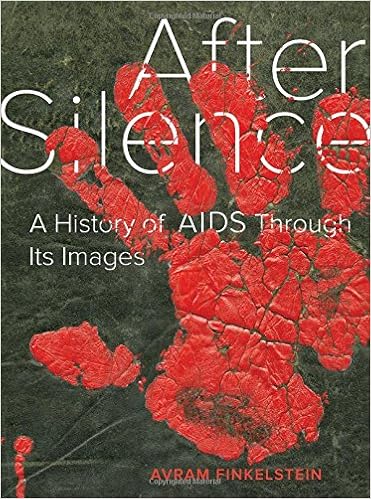
After Silence: A History of AIDS Through Its Images
by Avram Finkelstein
Early in the 1980s AIDS epidemic, six gay activists created one of the most iconic and lasting images that would come to symbolize a movement: a protest poster of a pink triangle with the words “Silence = Death.” The graphic and the slogan still resonate today, often used—and misused—to brand the entire movement. Cofounder of the collective Silence = Death and member of the art collective Gran Fury, Avram Finkelstein tells the story of how his work and other protest artwork associated with the early years of the pandemic were created. In writing about art and AIDS activism, the formation of collectives, and the political process, Finkelstein reveals a different side of the traditional HIV/AIDS history, told twenty-five years later, and offers a creative toolbox for those who want to learn how to save lives through activism and making art.

AIDS in the Twenty-First Century, Fully Revised and Updated Edition: Disease and Globalization
by Tony Barnett and Alan Whiteside
First published in 2002, AIDS in the Twenty-First Century was met with widespread praise from researchers and policy makers. This edition is fully revised to take account of the latest facts and developments in the field. All statistics and evidence have been updated and their meanings reconsidered. Latest developments in vaccines, anti-retroviral treatments and microbicides are discussed along with information about the President’s Emergency Plan for AIDS Relief and The Global Fund to Fight AIDS, Tuberculosis and Malaria.
AIDS Update 2014
by Gerald Stine
AIDS UPDATE 2014 presents a balanced review of current research and information on HIV infection, HIV disease, and AIDS. AIDS UPDATE 2014 places discussion within a biological, medical, and social framework, helping readers more fully understand this devastating pandemic.
The AmfAR AIDS Handbook: The Complete Guide to Understanding HIV and AIDS
by Darrell E. Ward
From the leading foundation for AIDS research, here is a comprehensive guide to help readers understand the complexities of HIV/AIDS and how treatment decisions are made. The AmfAR AIDS Handbook picks up where other books on AIDS leave off. It is the book you will turn to for a greater understanding of this disease, its causes and effects, and what new treatment options are being developed.
And the Band Played On: Politics, People, and the AIDS Epidemic, 20th-Anniversary Edition
by Randy Shilts
The national bestseller is now a major HBO TV movie, with stars including Alan Alda, Richard Gere, Lily Tomlin and Angelica Houston. “A heroic work of journalism on what must rank as one of the foremost catastrophes of modern history” (New York Times), this extraordinary book reveals how the federal government put budget considerations ahead of the nation’s welfare. (Penguin)
Body Count: Fixing the Blame for the Global AIDS Catastrophe
by Peter Gill
In his meticulously researched book, Peter Gill—author, journalist and AIDS campaigner—traces the political response to the epidemic, and demands accountability from those responsible. Body Count: Fixing the Blame for the Global AIDS Catastrophe is a fast-paced and in-depth look at strategic developments to address AIDS, condom use, and the crisis in Africa. Through his exclusive interviews with politicians, religious leaders, campaigners and HIV positive people, Gill points out the varying reactions- and inactions- of some of the greatest political leaders during the 25 year history of HIV/AIDS.
Denying AIDS: Conspiracy Theories, Pseudoscience and Human Tragedy
by Seth Kalichman
Paralleling the discovery of HIV and the rise of the AIDS pandemic, a flock of naysayers has dedicated itself to replacing genuine knowledge with destructive misinformation—and spreading from the fringe to the mainstream media and the think tank. Now from the editor of the journal AIDS and Behavior comes a bold exposé of the scientific and sociopolitical forces involved in this toxic evasion. Denying AIDS traces the origins of AIDS dissidents disclaimers during the earliest days of the epidemic and delves into the psychology and politics of the current denial movement in its various incarnations. Click here to read a POZ interview with the author.
The Epidemic: A Global History of AIDS
by Jonathan Engel
In The Epidemic: A Global History of AIDS, Jonathon Engel covers the story of AIDS from its beginnings to today. Blending together science, politics and culture, he is detailed in following the timeline of the epidemic and its tumultuous history. A celebrated medical historian, Engel lets the various players in the AIDS drama do much of the talking.
HIV/AIDS: A Very Short Introduction
by Alan Whiteside
HIV/AIDS is without doubt the worst epidemic to hit humankind since the Black Death. As of 2004, an estimated 40 million people were living with the disease, and about 20 million had died. Despite rapid scientific advances, there is still no cure and the drugs are expensive and toxic. In the developing world, especially in parts of Africa, life expectancy has plummeted to below 35 years, causing a serious decline in economic growth, a sharp increase in orphans, and the imminent collapse of health care systems. The news is not all bleak though. There have been unprecedented breakthroughs in understanding diseases and developing drugs. Because the disease is so closely linked to sexual activity and drug use, the need to understand and change behavior has caused us to reassess what it means to be human and how we should operate in the globalizing world. This Very Short Introduction tackles the science, the international and local politics, the fascinating demographics, and the devastating consequences of the disease, and suggests how we must respond.
HIV Pioneers: Lives Lost, Careers Changed, and Survival
Edited by Wendee M. Wechsberg
Tremendous strides have been made in the prevention and treatment of HIV since the disease first appeared in the 1980s. But because many of the people who studied and battled the virus in those early days are now gone, firsthand accounts are at risk of being lost. In HIV Pioneers, Wendee M. Wechsberg collects 29 “first stories” from the outset of the AIDS epidemic. These moving personal narratives and critical historical essays not only shed light on the experiences of global health pioneers, prominent scientists, and HIV survivors, but also preserve valuable lessons for managing the risk and impact of future epidemics.
With unprecedented access to many key actors in the fight against AIDS and HIV, Wechsberg brings to life the harrowing reality of those early days of the epidemic. The book captures the experiences of those still working diligently and innovatively in the field, elevating the voices of doctors, scientists, and government bureaucrats alongside those of survivors and their loved ones. Focusing on the impact that the epidemic had on careers, pieces also show how governments responded to HIV, how research agendas were developed, and how AIDS service agencies and case management evolved.
Illuminating the multiple facets of the HIV epidemic, both in the United States and across the globe, HIV Pioneers is a touching and inspirational look into the ongoing fight against HIV.
How AIDS Ends: An Anthology from San Francisco AIDS Foundation
by Barbara Lee, Cleve Jones, Jeanne White Ginder, Timothy Ray Brown, Neil Giuliano, Robert Gallo, Paul Farmer, Mark Dybul
When the history of HIV/AIDS is written, what will the final chapter look like? How AIDS Ends poses this question to 15 visionaries. We asked them to write history before it happens. The result is this first-of-its-kind anthology from San Francisco AIDS Foundation. Each author has been deeply touched by HIV/AIDS, and each is equally deeply committed to realizing the day when the disease is behind us. The end of HIV/AIDS is within reach. Take a glimpse into the future.
The Immortal Life of Henrietta Lacks
by Rebecca Skloot
Her name was Henrietta Lacks, but scientists know her as HeLa. She was a poor Southern tobacco farmer who worked the same land as her slave ancestors, yet her cells--taken without her knowledge--became one of the most important tools in medicine. The first “immortal” human cells grown in culture, they are still alive today, though she has been dead for more than sixty years. If you could pile all HeLa cells ever grown onto a scale, they’d weigh more than 50 million metric tons--as much as a hundred Empire State Buildings. HeLa cells were vital for developing the polio vaccine; uncovered secrets of cancer, viruses, and the atom bomb’s effects; helped lead to important advances like in vitro fertilization, cloning, and gene mapping; and have been bought and sold by the billions.
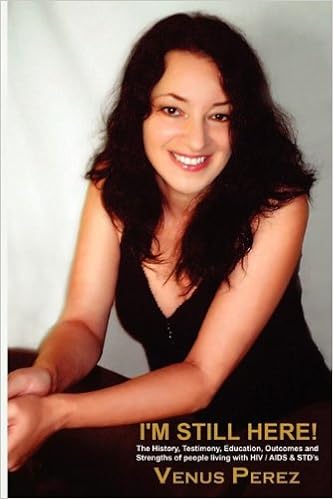
I’m Still Here: The History, Testimony, Education, Outcomes and Strengths of People Living with HIV/AIDS
by Venus Perez
The year is 2009. We have come so far yet we are not quite there. Many lives were lost yet many still live. Many know the means of transmission, yet many neglect to follow it. Many of us live the fast life, looking for excitement, for success. We are constantly searching for that missing part that dwells deep inside, each one of us. For many of us, we are lost, broken, unloved, discriminated, depressed and angry. We are still in denial, shunned by society as lepers were years ago. We are individuals with HIV/AIDS. We are part of the world, and this society. Our lives have meaning, and each one of us can make a difference. I would like to take you on a journey, where you can experience the history, the struggles, trials and outcomes. Our testimonies, weaknesses, strengths, and our never ending hope for tomorrow.
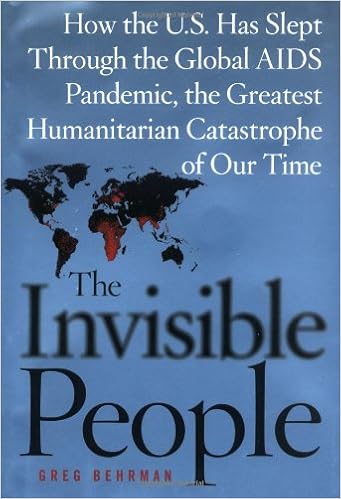
The Invisible People: How the U.S. Has Slept Through the Global AIDS Pandemic
by Greg Behrman
The Invisible People is a revealing, and at times shocking, look inside the United States’s response to one of the greatest catastrophes the world has ever known — the global AIDS crisis. A true story of politics, bureaucracy, disease, internecine warfare, and negligence, it illustrates that while the pandemic constitutes a profound threat to U.S. economic and security interests, at every turn the United States has failed to act in the face of this pernicious menace.

“Let the Record Show” by Sarah SchulmanCourtesy of Farrar, Straus and Giroux
Let the Record Show: A Political History of ACT UP New York, 1987-1993
by Sarah Schulman
In just six years, ACT UP, New York, a broad and unlikely coalition of activists from all races, genders, sexualities, and backgrounds, changed the world. Armed with rancor, desperation, intelligence, and creativity, it took on the AIDS crisis with an indefatigable, ingenious, and multifaceted attack on the corporations, institutions, governments, and individuals who stood in the way of AIDS treatment for all. They stormed the FDA and NIH in Washington, DC, and started needle exchange programs in New York; they took over Grand Central Terminal and fought to change the legal definition of AIDS to include women; they transformed the American insurance industry, weaponized art and advertising to push their agenda, and battled―and beat―The New York Times, the Catholic Church, and the pharmaceutical industry. Their activism, in its complex and intersectional power, transformed the lives of people with AIDS and the bigoted society that had abandoned them.
Based on more than two hundred interviews with ACT UP members and rich with lessons for today’s activists, Let the Record Show is a revelatory exploration―and long-overdue reassessment―of the coalition’s inner workings, conflicts, achievements, and ultimate fracture. Schulman, one of the most revered queer writers and thinkers of her generation, explores the how and the why, examining, with her characteristic rigor and bite, how a group of desperate outcasts changed America forever, and in the process created a livable future for generations of people across the world.
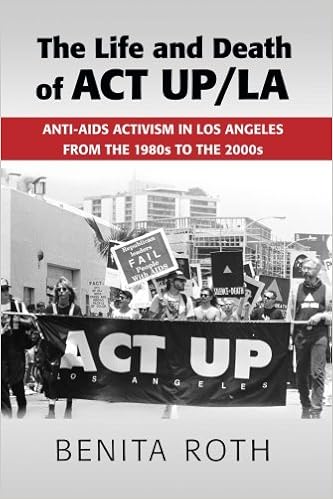
The Life and Death of ACT UP/LA: Anti-AIDS Activism in Los Angeles from the 1980s to the 2000s
by Benita Roth
The Life and Death of ACT UP/LA explores the history of the AIDS Coalition to Unleash Power, Los Angeles, part of the militant anti-AIDS movement of the 1980s and 1990s. ACT UP/LA battled government, medical, and institutional neglect of the AIDS epidemic, engaging in multi-targeted protest in Los Angeles and nationally. The book shows how appealing the direct action anti-AIDS activism was for people across the United States; as well as arguing the need to understand how the politics of place affect organizing, and how the particular features of the Los Angeles cityscape shaped possibilities for activists. A feminist lens is used, seeing social inequalities as mutually reinforcing and interdependent, to examine the interaction of activists and the outcomes of their actions. Their struggle against AIDS and homophobia, and to have a voice in their healthcare, presaged the progressive, multi-issue, anti-corporate, confrontational organizing of the late twentieth century, and deserves to be part of that history.
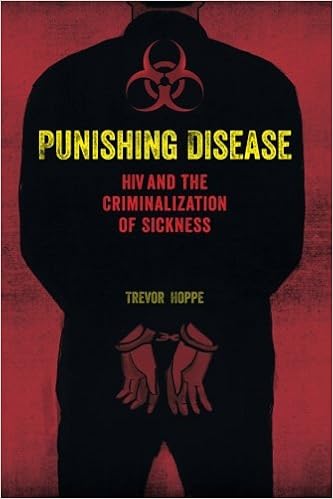
Punishing Disease: HIV and the Criminalization of Sickness
by Trevor Hoppe
From the very beginning of the epidemic, AIDS was linked to punishment. Calls to punish people living with HIV—mostly stigmatized minorities—began before doctors had even settled on a name for the disease. Punishing Disease looks at how HIV was transformed from sickness to badness under the criminal law and investigates the consequences of inflicting penalties on people living with disease. Now that the door to criminalizing sickness is open, what other ailments will follow? With moves in state legislatures to extend HIV-specific criminal laws to include diseases such as hepatitis and meningitis, the question is more than academic.
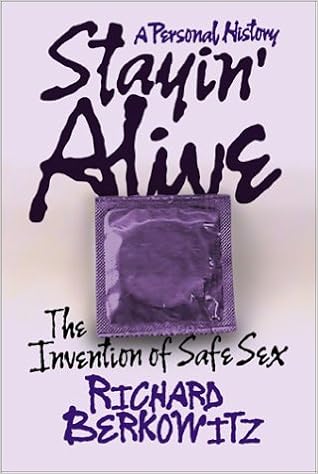
Stayin’ Alive: The Invention Of Safe Sex
by Richard Berkowitz
While the practice of “safe sex” has become an American habit over the past 20 years, few are familiar with its controversial origins and fascinating social history. Stayin’ Alive is the story of how reaching for a condom became as automatic as buckling a seat belt, a story compellingly and frankly recounted by activist and journalist Richard Berkowitz who arrived on the frontlines in the war on AIDS in 1982 and has been writing about it ever since. Berkowitz takes the reader on a graphic but moving account of his personal sexual journey coming out amid the sexual abandon of the 1970s and waking up to horror of AIDS in the 1980s. For younger readers with no first-hand experience of what it was like living through the erotic exuberance of the sexual revolution nor the grisly aftermath, the author offers a vivid portrayal that puts the invention of safe sex into fresh, compelling context for a new generation. “Safe sex” was born out of the tireless crusading, politicking, and advocacy of an unlikely trio whose lives revolved around sex and the consequences of sex: the author, the AIDS researcher and physician Joseph Sonnabend, and the late author, activist and singer Michael Callen. Berkowitz recounts how their work found a way to enable a generation of gay men and sexually adventurous heterosexuals to continue celebrating their sexuality without risking their lives or the lives of their partners - in two words, “safe sex.”

Testosterone: A Man’s Guide
by Nelson Vergel
Are you experiencing fatigue and low or no sex drive? Do you seem to have less mental focus? Do you have less tolerance to stress and feel down? Is your body getting softer while you are gaining fat? Have you been exercising for months or years without improvements in your body? You do not have the problems mentioned but you want to how to keep your testosterone within healthy ranges? Then, this book may be for you. You may be one of the 13 million men in the United States that are suffering from testosterone deficiency and who are suffering needlessly by not knowing it. This book will explain in clear and practical language the symptoms and treatments of testosterone deficiency to help determine if you are a good candidate for this therapy. Testosterone replacement therapy (TRT) can dramatically boost sex drive and function, strength, energy levels, mood, mental focus, and lean body mass while decreasing fat in men with testosterone deficiency syndrome (hypogonadism). However, it is not a therapy to start without proper knowledge about potential side effects and their management. There are several options for testosterone replacement available by prescription but many men do not know how to decide which is best for them. This book reviews all options from the author’s point of view as an educated patient who has used all available options and has researched the current scientific data. All myths and misconceptions surrounding testosterone are fully explained and resolved. After reading this book you will know:
- If you have low testosterone blood levels
- What your best TRT option is more suitable for you, if you need one
- How to avoid the main mistakes that men make when using TRT
- How to identify and treat potential side effects before they become a problem
- How to talk to your doctor about getting TRT, or how to find a doctor who prescribes testosterone
- What foods and medicines can lower your testosterone
- The truth about non-prescription testosterone boosters
- How to apply for financial assistance from testosterone manufacturers
- What compounding pharmacies are and how they can customize TRT options for you
The War on Sex
by David M. Halperin and Trevor Hoppe
The past fifty years are conventionally understood to have witnessed an uninterrupted expansion of sexual rights and liberties in the United States. This state-of-the-art collection tells a different story: while progress has been made in marriage equality, reproductive rights, access to birth control, and other areas, government and civil society are waging a war on stigmatized sex by means of law, surveillance, and social control. The contributors document the history and operation of sex offender registries and the criminalization of HIV, as well as highly punitive measures against sex work that do more to harm women than to combat human trafficking. They reveal that sex crimes are punished more harshly than other crimes, while new legal and administrative regulations drastically restrict who is permitted to have sex. By examining how the ever-intensifying war on sex affects both privileged and marginalized communities, the essays collected here show why sexual liberation is indispensable to social justice and human rights.
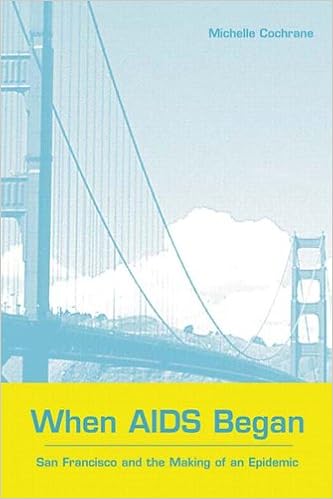
When AIDS Began: San Francisco and the Making of an Epidemic
by Michel Cochrane
As the AIDS crisis reaches new heights globally with no cure in the immediate future, the time is ripe to step back and examine the roots of this epidemic. In When AIDS Began, Michelle Cochrane constructs the making of the disease and expels many of the misconceptions that surround it. By examining the early outbreaks in San Francisco, she unfolds the creation of this disease in one geographic location and then traces how and why major claims about the transmission of HIV were made, extrapolated and then disseminated to the rest of the world - all important factors in understanding.
Through her fascinating analysis and research, Cochrane dispels the myths of AIDS by interviewing patients, public health officials, workers and gaining access to medical charts and documents from the San Francisco Public Health Department. She comes to question some of the orthodoxies of AIDS: mainly saying it’s a gay disease spread by sexual contact. She boldly suggests that in the tracking of the disease, sexual transmission is more often assumed rather than empirically documented. Instead, she suggests that IV drug use and socio-economic status may have played a much greater than acknowledged role among the risk factors for those who were infected.
When AIDS Began is an original and controversial addition to the ongoing dialogue on the disease. Clearly pushing boundaries, this is an important history of an epidemic that continues to plague the globe.
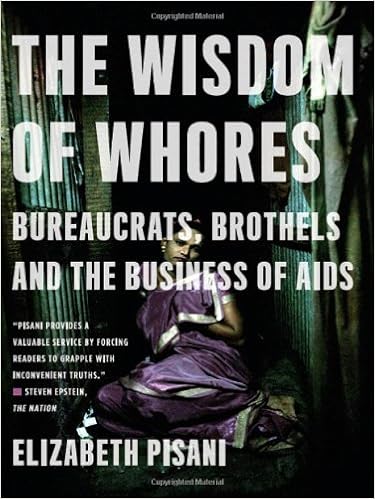
The Wisdom of Whores: Bureaucrats, Brothels and the Business of AIDS
by Elizabeth Pisani
As an epidemiologist researching AIDS, Elizabeth Pisani has been involved with international efforts to halt the disease for 14 years. With swashbuckling wit, fierce honesty, and more than a little political incorrectness, she dishes on herself and her colleagues as they try to prod reluctant governments to fund HIV prevention for the people who need it most: drug injectors, gay men, sex workers, and johns. With verve and clarity, Pisani shows the general reader how her profession really works; how easy it is to draw wrong conclusions from “objective” data; and, shockingly, how much money is spent so very badly.