

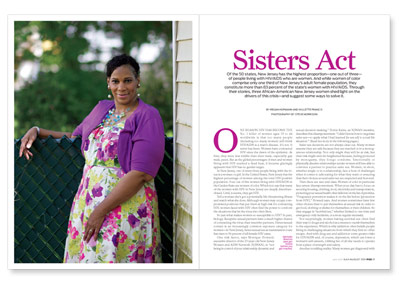
One reason HIV has become the No. 1 killer of women ages 15 to 44 worldwide is that too many people (including too many women) still think HIV/AIDS is a man’s disease. It’s not. It never has been. Women have contracted HIV since the dawn of the epidemic. At first, they were less visible than their male, especially gay male, peers. But as the global percentages of men and women living with HIV reached a dead heat, it became glaringly apparent that HIV has no gender target.
In New Jersey, one of every three people living with the virus is a woman or girl. In the United States, New Jersey has the highest percentage of women among the total HIV-positive population. Four out of five women living with HIV/AIDS in the Garden State are women of color. Which is to say that many of the women with HIV in New Jersey are deeply disenfranchised. Until, it seems, they get HIV.
Tell a woman she’s got a potentially life-threatening illness and watch what she does. Although women may occupy compromised positions that put them at high risk for contracting HIV, women faced with HIV often find the power to confront the situations that let the virus into their lives.
So just what makes women so susceptible to HIV? In part, biology. Receptive sexual partners have a much higher chance of contracting the virus than insertive partners. Heterosexual contact is an increasingly common exposure category for women—in New Jersey, heterosexual sex as transmission route has risen to 56 percent of all female HIV cases.
One risk factor, says Monique Howard, executive director of the 23-year-old New Jersey Women and AIDS Network (NJWAN), is “not being in control of your relationship dynamic and sexual decision-making.” Dottie Rains, an NJWAN member, describes this disempowerment: “I didn’t know how to negotiate safer sex—to apply what I had learned [in sex ed] to a real life situation.”
Safer-sex decisions are not always clear-cut. Many women assume they are safe because they are married or in a monogamous relationship. Not only might they still be at risk, but their risk might even be heightened because, feeling protected by monogamy, they forego condoms. Emotionally or physically abusive relationships render women still less able to convince a partner to practice safer sex. Women, in short, whether single or in a relationship, face a host of challenges when it comes to advocating for what they want or ensuring that their choices around safer sex are respected and honored.
Then there are race and class. Women of color in particular face severe disempowerment. When your day has to focus on securing housing, clothing, food, electricity and transportation, protecting your sexual health often falls low on the list of priorities. “Pregnancy prevention makes it on the list before [protection from HIV],” Howard says. And women sometimes have few other choices than to put themselves at sexual risk in order to get food, clothing or shelter for themselves or their children. So they engage in ”survival sex,” whether limited to one-time and emergency-only incidents, or a more regular necessity.
Not surprisingly, women having survival sex often find their way to drugs and alcohol as a means to numb themselves to the experience. Which is why addiction often befalls people living in challenging situations from which they find no other escape. And with drug use and addiction come greater risks for HIV/AIDS and, of course, depression, which can lower a woman’s self-esteem, robbing her of all she needs to operate from a place of strength and safety.
Another troubling reality: Many women get diagnosed with HIV late in disease progression—some still learn at the same time that they are living with HIV and have AIDS. This reflects both the tendency of women to take care of others first, neglecting their own health and the misconception that women don’t get HIV (women aren’t thinking about it; many doctors don’t consider their female patients at risk for HIV—some even resist giving an HIV test when a woman asks) . Even when women do seek health care, Howard says, “racial disparities persist. Blacks are less likely than whites to have insurance, for example, and often use hospital ERs for their primary care.”
Once they discover they have HIV, women—especially women of color—face unique challenges. Many live in low-income areas with few resources and limited access to health care, transportation and child care. Many are single moms. The racial discrimination of mass incarceration not only fractures families but also disrupts and disenfranchises entire communities.
So, can we flip the script—and how?
“I think it’s doable,” Howard says. “Prevention programs work if given enough money and time. It takes you three or four months just to get [a program] up and running. [Funds for prevention programs] have to be multi-year.”
“The other key,” Howard says, “is to be a little more innovative with titles and labels. Nobody is going to define themselves as ‘high-risk.’ [If you label a program ‘for high-risk women,’] I’m not going, and I don’t know too many people that are. But if, instead, you talk about how we make sex sexy and safer, and tell women, ‘These things will help you be there to raise your children,’ it will work. It’s OK to tell the funder that this is for high-risk women, but that doesn’t go on the flier for recruitment. And organizations have to move into the 21st century and start using the social media to reduce risk and get out prevention messages.”
And, of course, we need to support and teach one another. If there’s one thing women know how to do, it’s talk to each other. So, read the stories of these three inspiring women, and then tell some friends. Tell your mom, your sister, your aunt, your niece, your neighbor, your gal pal—anyone of the female persuasion—and encourage them to find out their HIV status. Point them to poz.com to learn about HIV—and how to prevent it.
Federal prevention dollars are dwindling, but that’s no excuse for women not getting the information they need. Let’s ask our friends in the Girl Scouts, at breast and ovarian cancer foundations, at Planned Parenthood, at any woman-focused organization to help spread the word. Go to websites for women and post comments. We can’t let our sisters down.
Michelle Braxton, 48, Homemaker; West Orange, New Jersey
One day, my husband said that the doctor wanted to see me (we shared the same primary care doctor). When I asked why, he just said, “He wants to see you.”
I went to our doctor, and he gave me an HIV test. At the follow-up visit, I found out I was HIV positive. It was in the late ’80s. I had contracted the virus from marital sex with my husband, who I believe was unaware of his status until about a year or so before I tested positive. In hindsight, I remember seeing him take Bactrim [a sulfa drug], and now I know that it is used to keep infections down in people living with HIV. 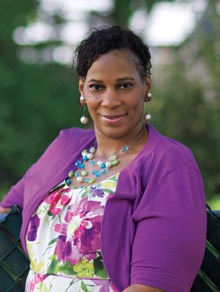 I don’t know what prompted my husband to get tested. I knew that he had been struggling with an alternative, gay lifestyle when he was younger, before he came to know the Lord. He came to the church not aware of his past probably following behind him. We met at church, got married and the rest, as they say, is history. We were married for 13 years, until he died.
I tried to talk to my husband about my diagnosis, but he didn’t want to talk about it. I didn’t have him as support at all. I believe that was due to his guilt and not knowing how to express it. But he loved me as much as he knew how to. And stupid and all, I loved him.
My foundation had always been the church, and that’s where I got a lot of my support. My mother, dad, sister, brother and friends were also my support system. As soon as I learned I had HIV, I began to tell my family. That’s so important, because I think secrecy can kill you.
My spirituality also played a part in my deciding when to get treated. I didn’t get treated right away. I prayed first about it because we believe that God is a healer and can do anything. And when I prayed, I believed that the spirit of the Lord spoke to me and told me I shouldn’t take the medicine at the time, because I would die. I didn’t start treatment until 2010.
I think my ignorance made me more vulnerable to HIV. I grew up in a church community that didn’t educate young women who desired to get married on how to protect themselves. The spirituality part doesn’t balance out with the reality of the times. I believe you should not have sex before marriage, but people do, and they’re not protecting themselves.
The church didn’t equip us to say, “If you’re getting married, you need to get tested. You need to find out your status.” The church’s platform should include HIV/AIDS programs, and a lot of churches don’t—when they should be dealing with this disease head-on. If young people learn from responsible adults who have their best interests at heart, they can equip themselves to be prepared to live a healthy, happy life.
Minister Jae Quinlan, 49, Minister/Multimedia Artist; Newark, New Jersey
I was at a drug treatment facility in 1989 for crack addiction when I became very ill. In nine days, I lost about 25 pounds. I had been tested for everything you could think of, and everything was coming back negative. I finally asked the HIV coordinator/educator if I could be tested for HIV. Her response was, “You’re a lesbian, right? And you don’t use intravenous drugs, right? So you’re in the lowest risk category, and it would be a waste to test you.”
But I continued to push for an HIV test. I knew you could put yourself in a compromising situation when you’re out there in the streets abusing yourself by having unprotected sex for drugs or to live. They finally tested me for HIV. The test came back positive.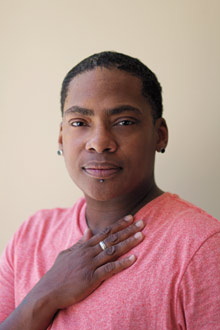 I wasn’t concerned with HIV/AIDS prior to getting sick and being diagnosed. It was not on my radar. It should have been, but back then the virus was still considered a white gay male disease. And worrying about HIV couldn’t contend with thinking about how am I going to get high, how am I going to eat? My life at the time was very mixed up in the drug game, and I did whatever I had to do to maintain that particular lifestyle.
Once they told me I was HIV positive, honestly, my gut reaction was that God had needed to do something to slow me down because I was really killing myself on the streets. And then I was mortified. I started going to see doctors because the drug treatment facility I was in was affiliated with Memorial Sloan-Kettering, which had a satellite HIV/AIDS treatment facility. But I didn’t start taking HIV treatment because I was afraid. I participated in a clinical trial, but I stopped when I began to see people that I loved and cared for in this study die. So I kept myself from being treated.
I was still going to the doctor every three months, though, to be evaluated. I had been doing well since my diagnosis, but then I suddenly took a nosedive. At one visit to the doctor, my viral load was over 387,000 copies. There was no getting around treatment at this point. I thought, do you want to die, or do you want to take the chance to save your life and be able to thrive again? In 1992 or ’93, after a cancer diagnosis that almost took my life, I decided it was time to stop being afraid and start treatment.
Now, I happen to be thriving with HIV. It doesn’t define me. I have made sure that it doesn’t order my day. I’m not saying that people who are ill should ignore HIV, should just concentrate on other things. But if you’re doing a good job of managing your illness, and you’re informed about what it is you need to do, then you should not allow HIV to order your day. Let it work with you instead of you working with it. And it can be done.
I think the media have done us some injustice by—dare I say it?—normalizing HIV, making it as common, as everyday, as diabetes. Or you know, “It’s manageable now.” How is it manageable when it’s still killing our people?
I think we need public service announcements in every form, everywhere—on billboards, television, radio. We need grassroots organizations in every neighborhood targeting not just our youth, but everyone. Breaking it down, approaching each ethnic group specifically and also by socio-economic status. That’s what we need to do.
Dottie Rains, 35, Educator; Mercer County, New Jersey
I learned I was HIV positive during a routine checkup. They asked if I wanted to take an HIV test, and I said sure, because I was having unprotected sex. You know, to be honest, I was educated about [how to prevent HIV], but I guess being a teenager, you think: It can’t happen to me. So—’cause you know how they say teenagers think they are invincible and that nothing can happen to them—basically I felt that way at the time. I felt that things like HIV happen to other people, not me. I was diagnosed at age 16. 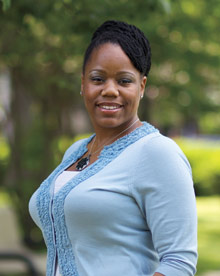 Even though I had learned about HIV/AIDS from sex education in school, I still didn’t know how to negotiate safer sex. I didn’t have the necessary skills to apply what I had learned to a real-life situation, when you’re hot and heavy and your hormones are raging.
And when you’re growing up in an urban area with a dysfunctional family structure, condom use is not high on the list of priorities. My mother was a drug user. She went through programs for her addiction, but I think she was still getting high. We were focused on those basic things that you need in order to survive—getting food, clothing and shelter. Those were more important than worrying about protection.
I wasn’t even living at home with my mother. I was living with a family friend in North New Jersey. I called her my aunt, and she was my legal guardian. Even though she accepted me in her home like I was one of her children, provided food and shelter, it still wasn’t home. I felt rejected by my mother, and I really needed to feel loved and accepted. The process of trying to find that brought along a whole bunch of other issues—becoming HIV positive. I always dated guys who were older than me. I don’t know who infected me. You just find yourself in a situation where you’re like, wow, you were searching for one thing but you wind up with something else.
I did not start HIV treatment right after I got my diagnosis. I didn’t feel sick, so I didn’t feel like I needed medication. Almost two years later, I started treatment because I was pregnant with my son. I was now responsible for my baby’s life, so I needed to do everything I could to make sure that I wouldn’t transmit the virus to him. My son is HIV negative.
By this time, I had left my guardian’s home. I moved to Trenton and began living at Rainbow House, a group home. There I started to get on my feet, finished school, gained parenting and life skills and blossomed. I started to do work around HIV and AIDS, telling my story, educating people—trying to lessen the stigma around HIV.
I believe having better self-esteem and understanding who I was as a woman would have helped me stay negative.


Comments
Comments